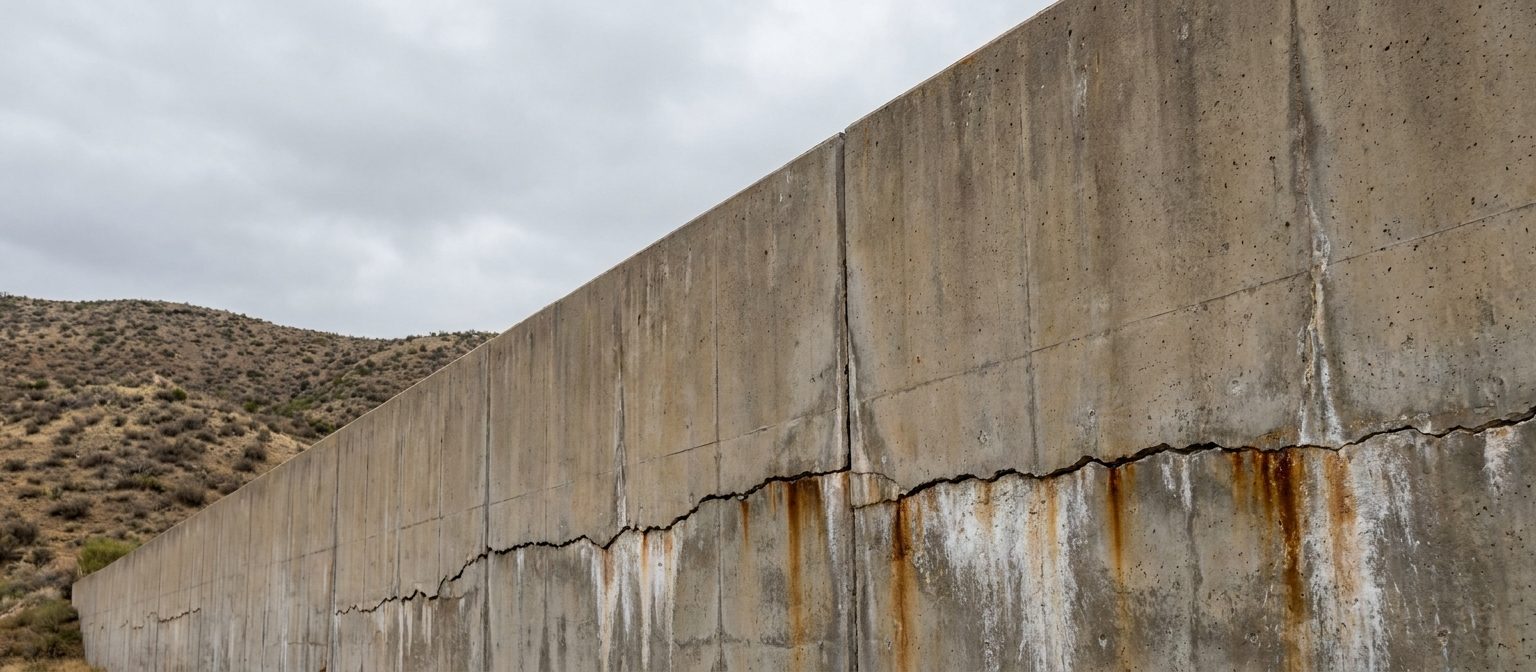
What Do Cracks in a Retaining Wall Mean?
A crack is the wall telling you which way it is being loaded. Direction, position and width together identify the mechanism, and the mechanism decides whether you are looking at a cosmetic repair or a structural one. Filling a crack without reading it is how a bending failure gets painted over.
On LA walls the pattern usually points back to the same short list — water behind the wall, a footing that has moved, or a surcharge nobody accounted for. The crack is evidence; the repair addresses whatever produced it.
How to Read the Crack Pattern
- Horizontal cracks near the base. The most serious pattern. This is bending failure under lateral load, and it frequently appears alongside a belly forming mid-run. Treat as urgent.
- Vertical hairline cracks. Usually shrinkage in the poured concrete as it cured. Cosmetic in most cases, but worth sealing so water and reinforcement never meet.
- Stepped cracks through joints. In CMU block or segmental block, movement at the footing — one part of the wall has settled relative to another.
- Diagonal cracks from a corner. Differential settlement, typically where a wall turns or where fill depth changes underneath.
- Wide cracks with displacement. If the two faces no longer line up, the wall has moved, not just cracked. Read leaning retaining wall as well.
- Efflorescence and rust staining. White salt deposits mean water is passing through. Rust means it has reached the reinforcement, which is a clock running.
How We Repair Cracked Retaining Walls
Epoxy injection
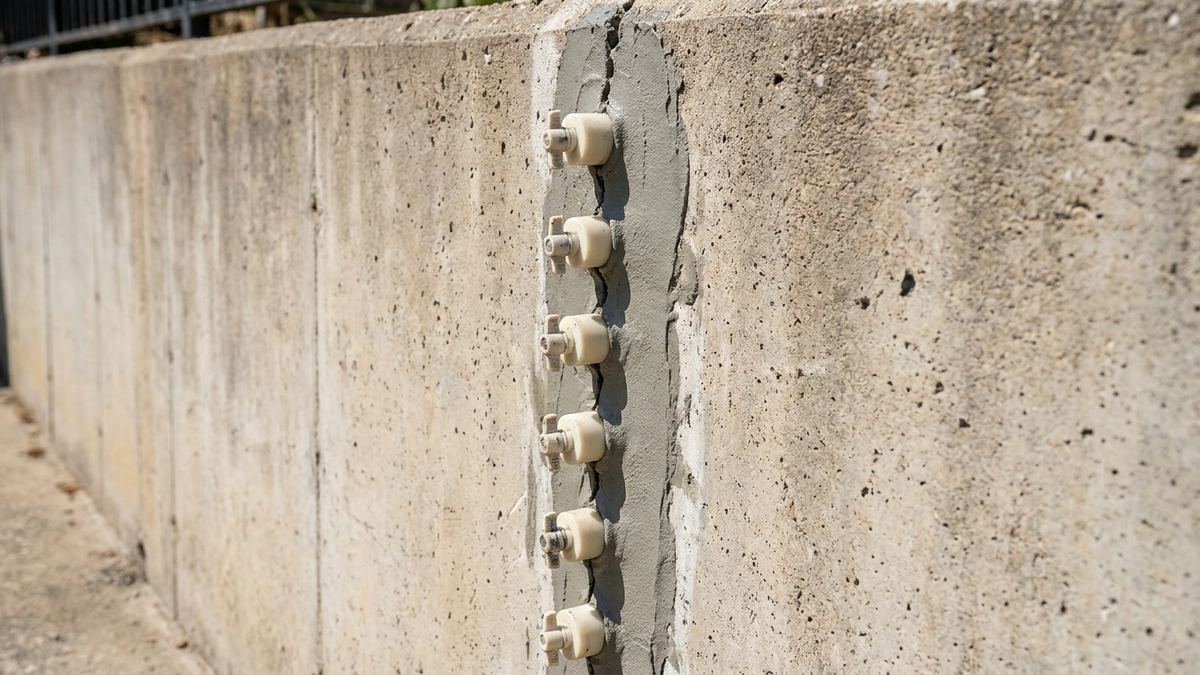
For structural cracks that are stable and not moving. Ports set along the crack, paste seal between them, resin injected under pressure to restore monolithic action. Only appropriate once the cause is fixed.
Stitching and reinforcement
Where the crack will keep working, stainless helical bars bedded across it transfer tension rather than relying on the resin alone.
Repointing and face repair
For CMU block and segmental block where mortar has failed rather than the structure. Cosmetic, and honest about being cosmetic.
Fixing what caused it
Nearly always includes retrofitting drainage, and frequently anchoring it back where the crack came from bending rather than settlement.
How We Assess a Cracked Wall
- Map the cracks. Direction, length, width and where they start and stop — photographed and marked.
- Check for movement. Whether the faces are still aligned, and whether the crack is wider at one end.
- Look for water. Staining, efflorescence and damp patches say the crack is a symptom of drainage.
- Test whether it is active. Where it matters, we monitor across a wet season before committing to a repair method.
- Give a verdict in writing. Cosmetic, structural-but-stable, or structural-and-moving — with the reasoning.
Why Choose Us For Retaining Wall Crack Repair?
We diagnose the pattern
Direction and position decide the repair; a price given without them is guesswork.
We say when it is cosmetic
Plenty of vertical hairlines need sealing and nothing more. We will tell you so.
We fix the cause
Injection over an active crack fails. The water or the load gets addressed first.
Monitoring where it is warranted
Some cracks need a wet season of observation before the right repair is obvious.
Photos of the work
Ports, injection and any reinforcement documented before finishing.
Written workmanship warranty
Handed over at sign-off with the manufacturer's material coverage.
Retaining Wall Crack FAQ's
Which retaining wall cracks are dangerous?
Horizontal cracks, especially near the base, are the ones to act on — they indicate bending under load. Vertical hairlines are frequently shrinkage and cosmetic. Any crack paired with a lean or a bulge means the wall has moved and should be assessed promptly.
Can I just fill the crack myself?
On a cosmetic vertical hairline in a low garden wall, sealing it is reasonable. On anything horizontal, stepped or displaced, filling it removes your only evidence of what the wall is doing without changing the load one bit.
What is the white powder on my wall?
Efflorescence — mineral salts left behind as water passes through the wall and evaporates. It is not damaging in itself, but it confirms water is moving through, which points at drainage retrofit.
Does epoxy injection actually work?
On stable structural cracks, yes — it restores the wall to acting as one piece. On a crack that is still moving it will simply crack again beside the repair, which is why we establish whether the crack is active first.
How much does crack repair cost?
Sealing cosmetic cracks on a short run is inexpensive. Structural injection with stitching, and the drainage retrofit that usually accompanies it, runs considerably higher. The assessment tells you which you are buying.
When is a cracked wall beyond repair?
When cracking is widespread, the faces have displaced, and the pattern says the footing or reinforcement was never adequate. At that point failing wall replacement costs less than a sequence of repairs that each buy a season.
Related Retaining Wall Repairs
Wall problems rarely arrive alone. A lean usually comes with a drainage failure, and a bulge usually comes with cracking — so the repair that fixes your wall is frequently two of these working together. Each page below covers how that condition is diagnosed and what the repair actually involves, or start from the retaining wall repair overview.