What Is Retaining Wall Repair?
Retaining wall repair is structural work that restores a wall's ability to carry the load behind it. That is a different job from resurfacing or repointing. A wall that has leaned, bulged, or cracked horizontally has already told you it is carrying more than it was built for, and cosmetic work over that hides the evidence without changing the arithmetic.
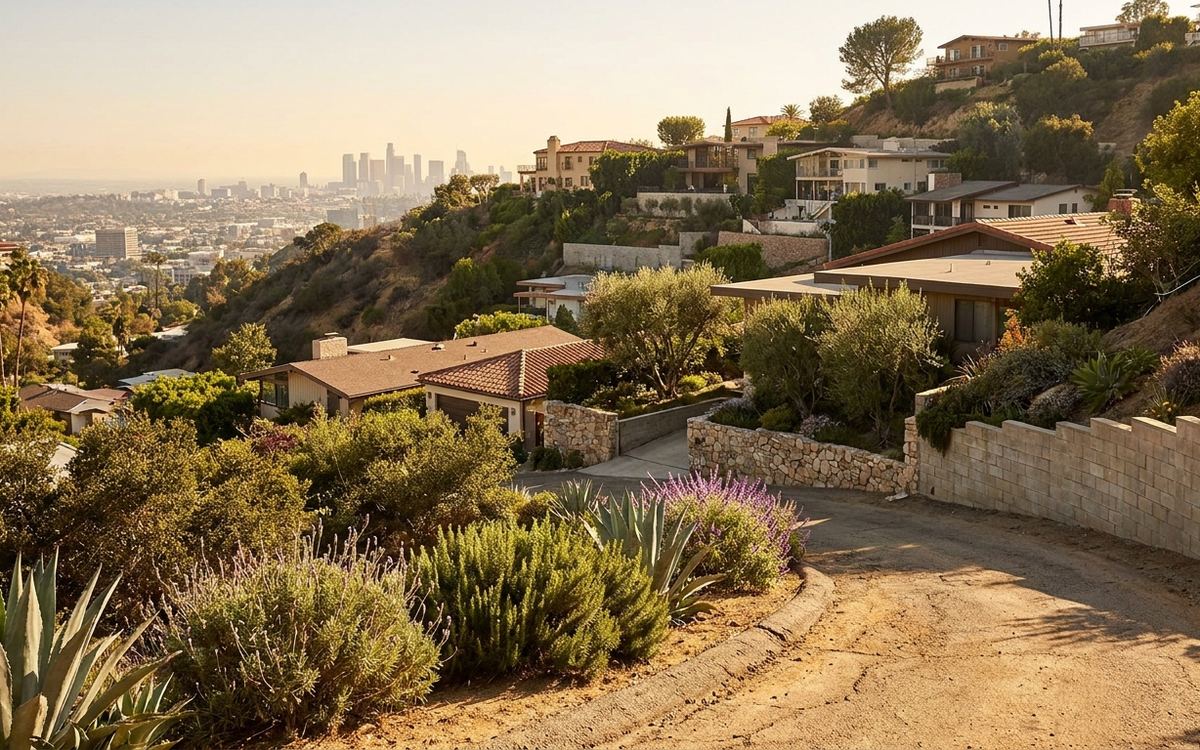
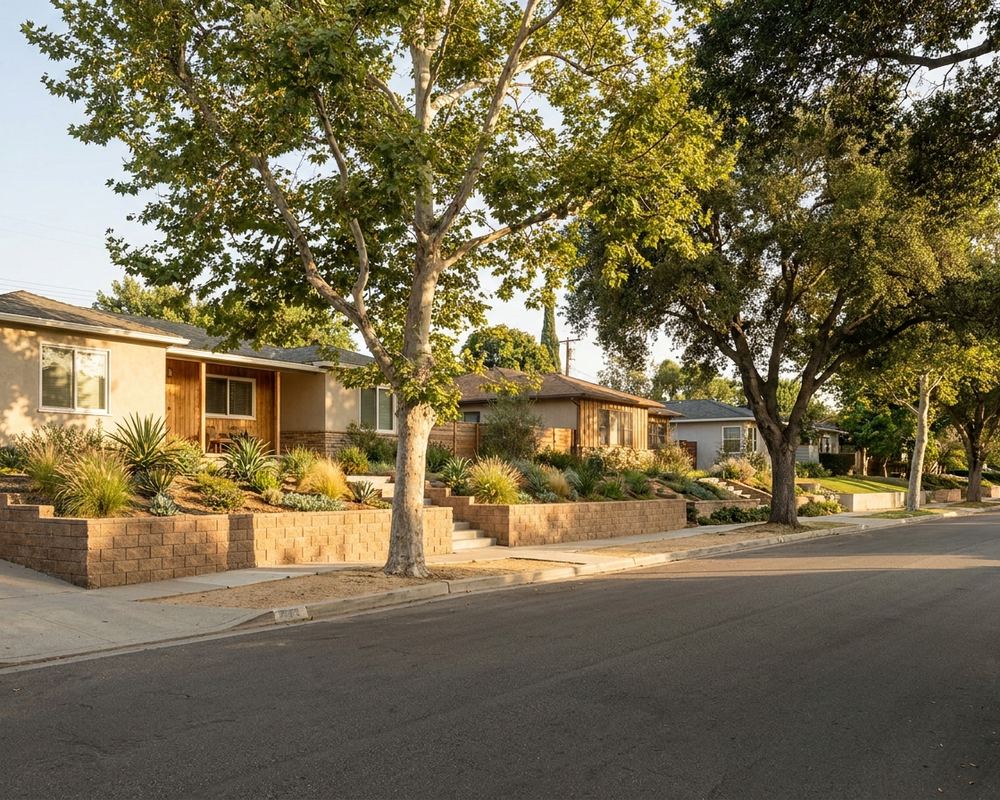
In Los Angeles the walls we are called to are usually one of two vintages. The first are mid-century subdivision walls across the Valley, the Verdugos and the foothill cities, built before drainage behind a wall was standard practice and now three or four decades into a cycle of clay soils swelling every wet winter and shrinking every dry summer. The second are newer landscape walls built to a decorative spec on a slope that needed an engineered one.
Both fail the same way. Water collects behind the wall, hydrostatic pressure roughly doubles the load, and the wall moves. Repair means finding which part of that chain broke on your wall specifically — drainage, footing, reinforcement, or an unaccounted surcharge from a driveway or slope above — and fixing that, not the symptom on the face.
What Causes a Retaining Wall to Fail?
Retaining walls almost never fail because the blocks were bad. They fail because water got trapped behind them. Saturated soil roughly doubles the lateral pressure a wall has to resist, and a wall designed for dry conditions simply is not built for that number.
After drainage, the usual causes are an undersized footing, missing or misplaced reinforcement, a surcharge nobody accounted for — a driveway, pool, or slope above the wall — and backfill that was dumped rather than compacted in lifts. Diagnosing which of those is at work decides whether your wall can be repaired or has to come down.
Signs Your Retaining Wall Needs Repair
Walls warn you before they go. The pattern of the damage tells us a lot about the cause, and about how urgent it is.
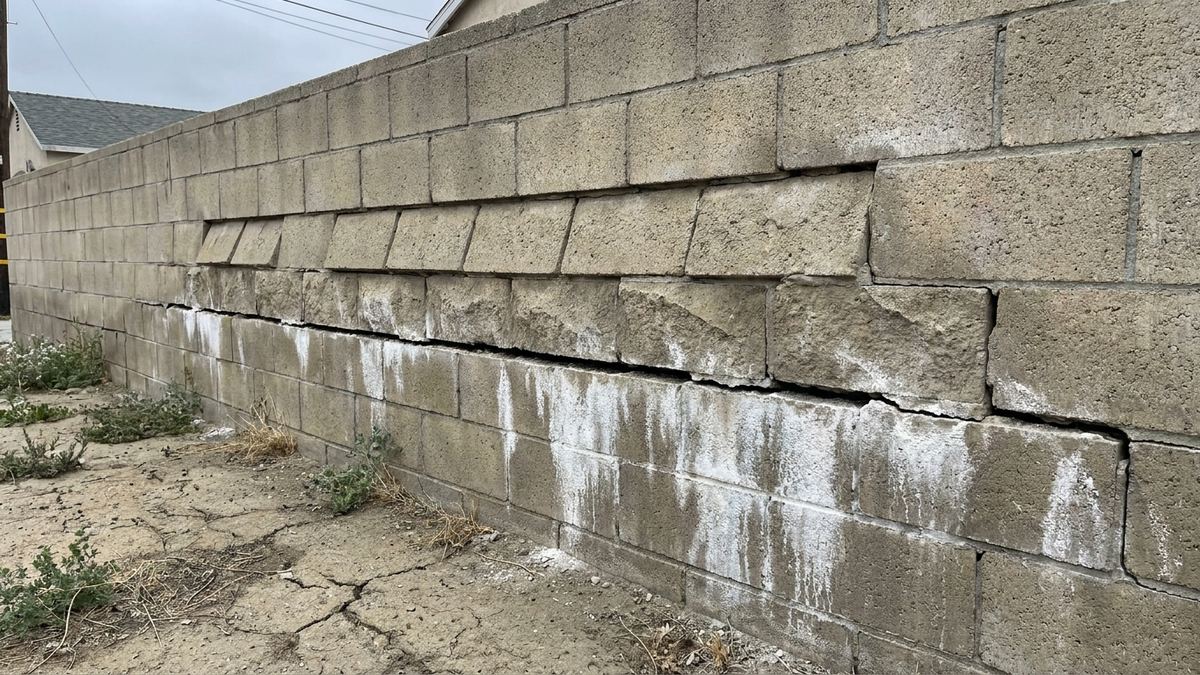
- Leaning or tilting. Any visible lean away from the slope means the wall is losing to the soil behind it. This is movement in progress, not a finished condition.
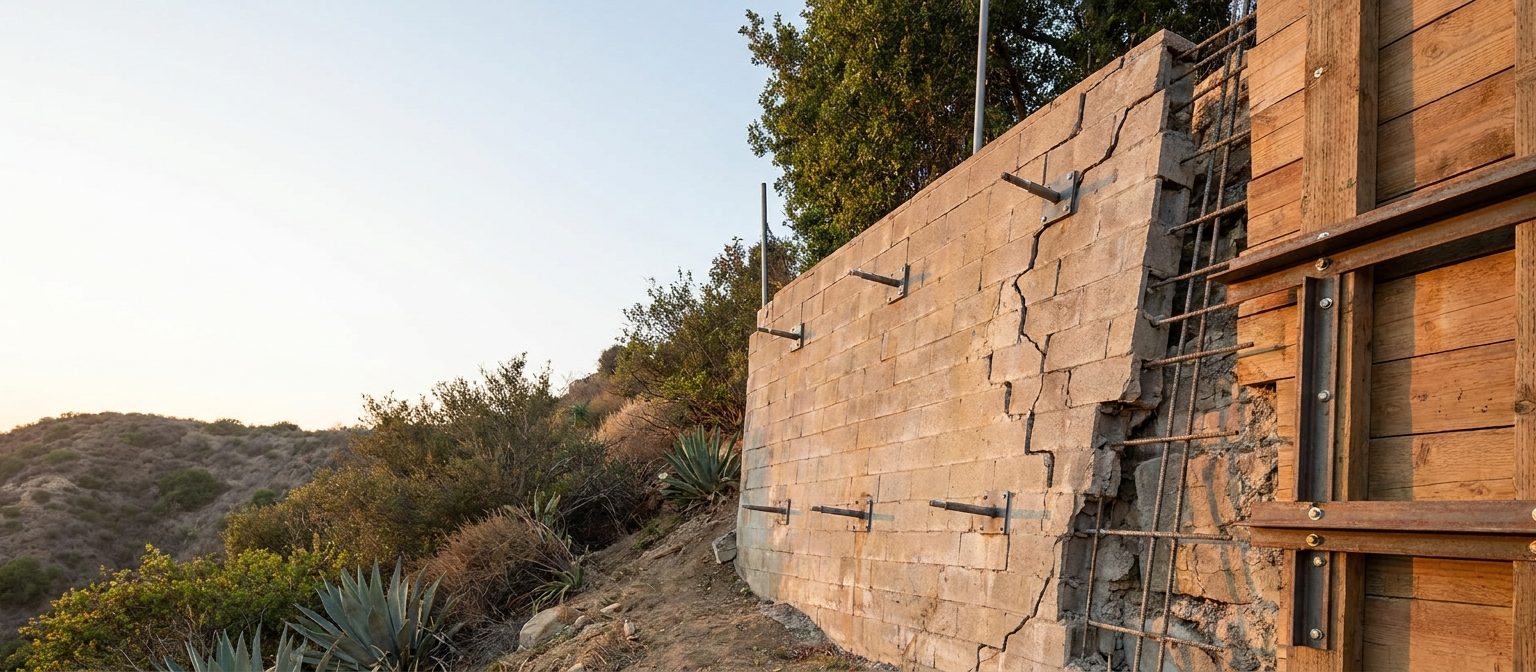
- Horizontal cracking. Vertical hairlines are often shrinkage. Horizontal cracks, especially near the base, indicate bending failure under load — the most serious pattern on a wall.
- Bulging in the middle of the run. A belly in the wall face means pressure is concentrated where the wall is weakest.
- Water weeping through the face. Damp patches, efflorescence, or constant seepage mean water is sitting behind the wall instead of draining.
- Soil or paving dropping behind. A gap opening behind the wall, or a patio settling near the top, means backfill is migrating.
- Blocks stepping or separating. Joints opening and courses sliding out of line point to differential movement in the wall or the footing under it.
- Blocked or missing weep holes. If drainage outlets are absent or packed with soil and roots, the drainage system is not working regardless of how the wall looks.
How We Repair Retaining Walls
The repair follows the diagnosis. We are not interested in cosmetic patching that hides movement for a season and returns worse.
Tieback and helical anchors
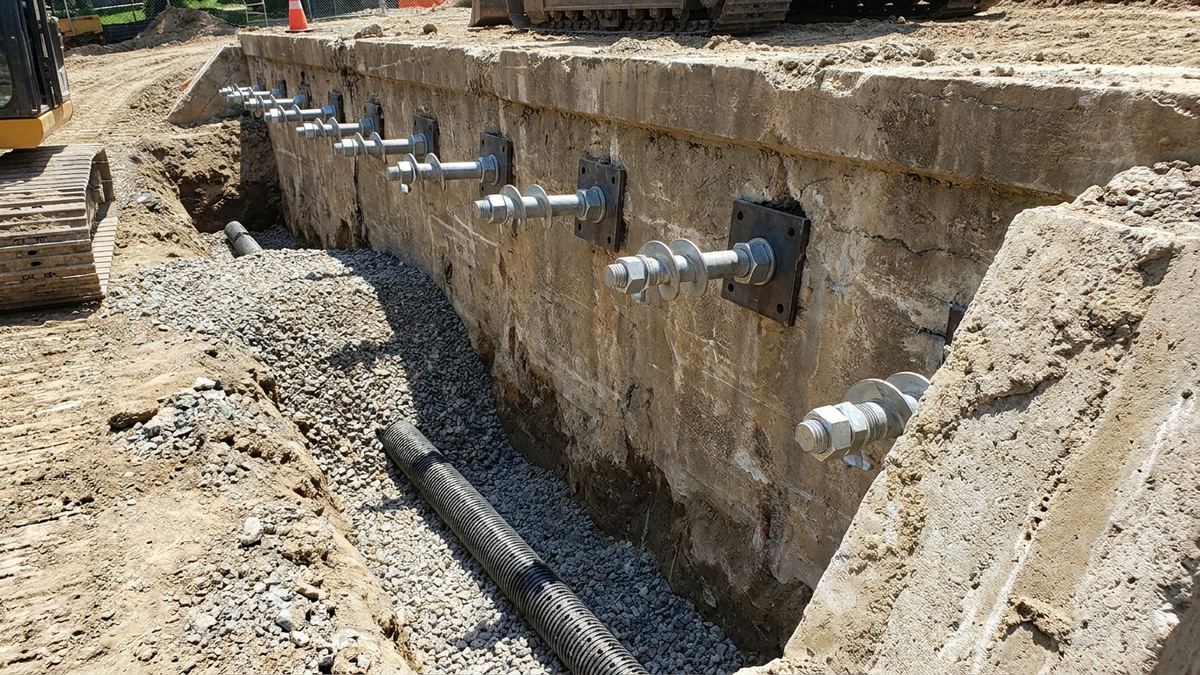
Steel anchors drilled through the wall face into competent soil behind it, then tensioned. This is how a leaning wall gets pulled back into service without demolition, where the wall itself is still sound.
Drainage retrofit
Excavating behind the wall to install the gravel chimney, filter fabric, and perforated pipe that should have been there originally, discharging to a legal outlet. On many walls this alone stops the progression.
Crack and face repair
Structural epoxy injection or stitching for cracks that are stable, plus repointing and face repair. Only appropriate once the underlying cause is fixed.
Partial or full replacement
When the footing is undersized or the wall has moved too far, rebuilding is cheaper than repeatedly repairing. We will say so plainly rather than selling you a repair that buys eighteen months.
How Our Retaining Wall Repair Service Works
- Call and describe what you're seeing. Lean, crack pattern, water, or movement — two minutes tells us how urgent it is.
- Free on-site assessment. We measure the lean, read the crack pattern, check where water goes, and look at what sits above the wall.
- Honest verdict. Repairable, repairable-for-now, or replace. In writing, with the reasoning, not just a number.
- Itemised written estimate. Broken out line by line so you can compare it against another opinion honestly.
- Engineering where required. Anchored repairs and tall walls need stamped design and permits. We coordinate that.
- Repair and monitoring. Work photographed at every stage, with a follow-up look after the first wet season.
Why Choose Us For Retaining Wall Repair in Los Angeles?
We diagnose before we quote
A number given without reading the crack pattern is a guess with a price attached.
We will tell you not to repair
If the footing is wrong, a repair is money spent twice. We would rather lose the smaller job.
Drainage is always in scope
Fixing the wall without fixing the water is why walls get repaired twice.
Anchoring instead of demolition
Where a wall can be saved, tiebacks cost a fraction of a rebuild and leave your planting intact.
Photos of what gets buried
Anchors, drainage, and backfill photographed before anything is covered.
Written workmanship warranty
In writing at sign-off, alongside the manufacturer's material coverage.
Retaining Wall Repair Services We Provide
The right repair depends entirely on why the wall moved, which is why every page below starts with diagnosis rather than method. A leaning wall on a Verdugo foothill lot with sound footings is a very different job from the same lean on a wall whose base has rotated, and a drainage retrofit that fixes one will do nothing for the other. Across Los Angeles the underlying cause is usually water behind the wall, an unaccounted surcharge from a slope or driveway above, or a footing that was never sized for expansive clay. Follow the symptom closest to what your wall is doing for how it is assessed, what the repair involves, and when replacement is genuinely the cheaper answer.
Retaining Wall Repair FAQ's
Can a leaning retaining wall be saved?
Often, yes. If the wall structure and footing are sound and the lean is from soil pressure rather than foundation failure, tieback or helical anchors can pull it back and hold it. If the footing is undersized or the wall has rotated at the base, replacement is the honest answer.
How much does retaining wall repair cost in Los Angeles?
Drainage retrofits and crack repair on a short run are usually a few thousand dollars. Anchored repairs on a tall engineered wall run substantially higher, and full replacement is priced like new construction. Access is often the biggest single variable on a hillside lot.
Is a cracked retaining wall dangerous?
It depends entirely on the crack. Vertical hairline cracking is frequently shrinkage and cosmetic. Horizontal cracking near the base, or any crack paired with a lean or bulge, indicates the wall is under more load than it was built for and should be looked at promptly.
Do I need a permit to repair a retaining wall?
Cosmetic repair generally does not require one. Structural repair — anchors, rebuilding, or anything altering how the wall carries load — usually does, and requirements differ between the City of LA, the County, and cities like Pasadena and Glendale. We confirm for your address before quoting.
How long does a repair take?
A drainage retrofit on a short run is a few days. An anchored repair on a tall wall is typically one to three weeks on site, plus permit time beforehand where engineering is required.
Will my landscaping survive the repair?
Anchored repairs work from the face and disturb very little. Drainage retrofits require excavating behind the wall, so planting in that strip comes out. We'll show you the working width at the estimate so there are no surprises.