What Is a Parking Lot Retaining Wall?
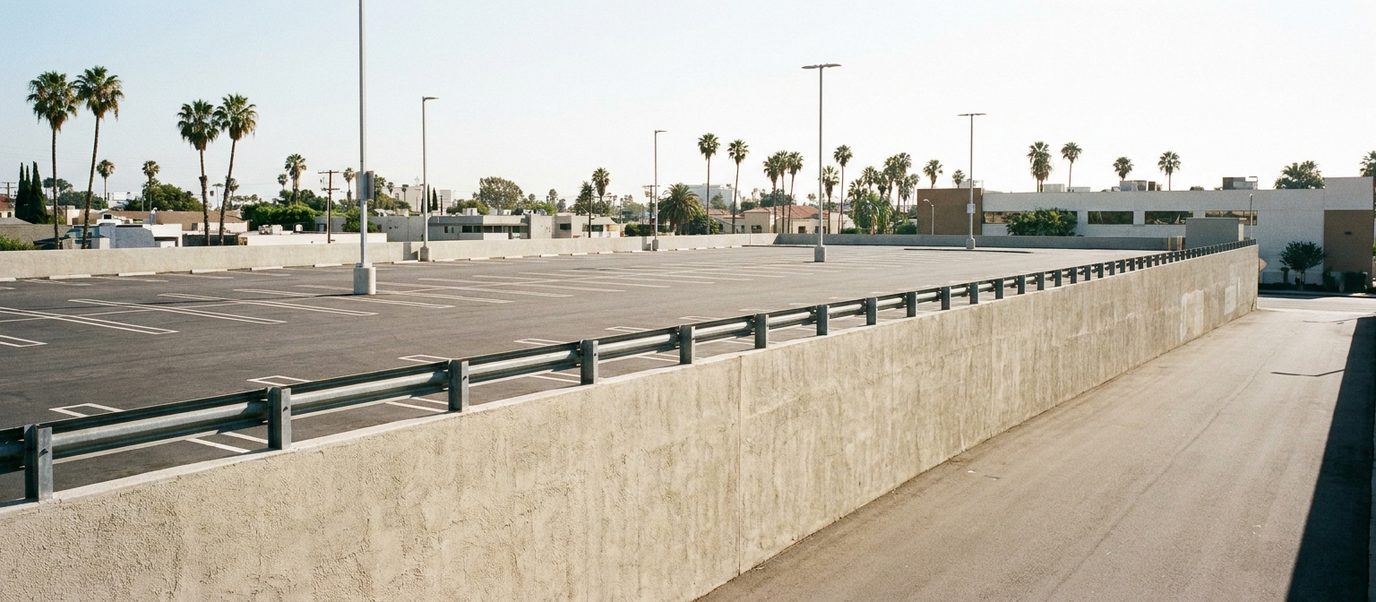
A parking lot retaining wall holds the grade change at the edge of a paved vehicle area — a lot cut into a slope, a lot built out over one, or a drive aisle terraced above an access road. Structurally it is not a garden wall made longer. It is a wall carrying a live load that moves, brakes and occasionally hits things.
That load is the whole design problem. A vehicle parked near the top of a wall applies a surcharge — additional pressure transmitted through the soil to the back of the wall — and a delivery truck applies several times what a car does. Add impact from a vehicle contacting a barrier, and a wall that would be routine holding a planted slope becomes an engineered structure with a different footing, different reinforcement and a different failure consequence.
What Vehicle Loading Changes
- Surcharge is designed for, not hoped about. The design load depends on what actually uses the lot. A wall behind passenger stalls and a wall behind a loading dock are different structures even at the same height.
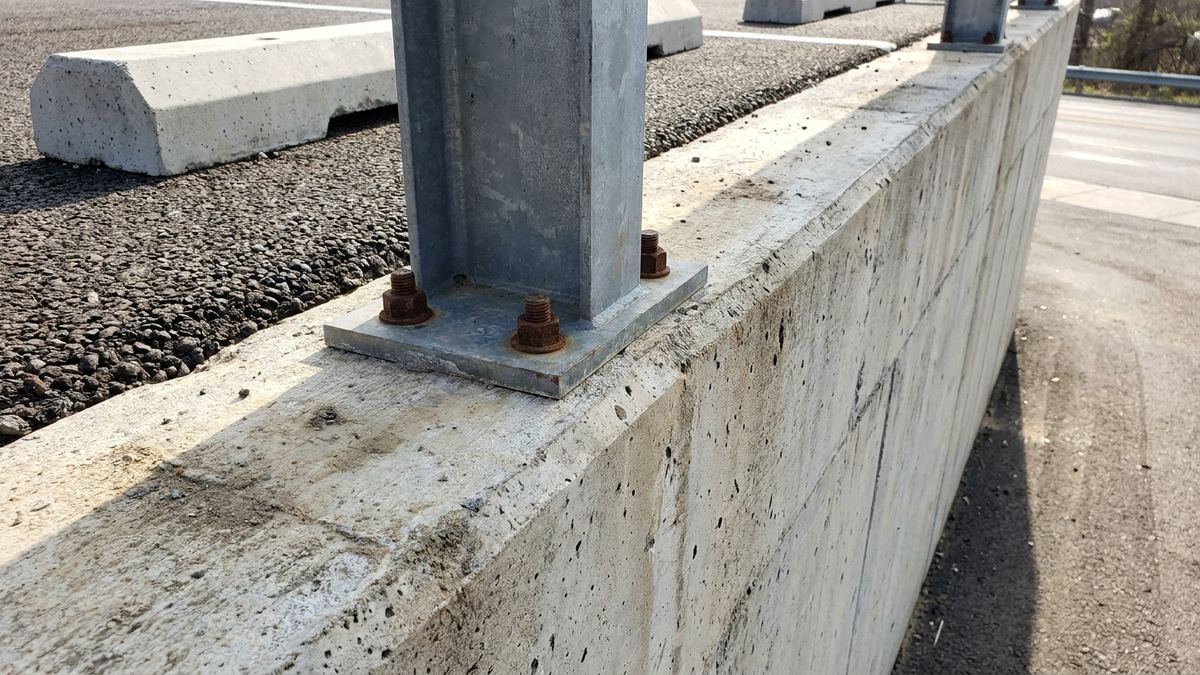
- Barrier and guardrail attachment. If a barrier is mounted on the wall, the wall carries the impact load transmitted through it. That attachment is designed with the wall, and retrofitting a rail onto a wall never intended to hold one is a real and fairly common problem.
- Reinforced systems suit it. Concrete retaining walls and CMU block handle surcharge readily. Segmental block walls can, but the geogrid reinforcement has to extend well beyond the loaded zone — which on a tight lot is exactly the room that is not available.
- Paving loads the wall too. The pavement section, its base and its own drainage all sit in the zone behind the wall and all contribute.
- Drainage has nowhere to soak away. A paved catchment sheds close to all of its rainfall, so wall drainage at a parking lot edge handles far more water than the same wall in landscape.
- Accessibility and grades interact. Accessible routes, stall cross-slopes and drive-aisle gradients constrain the finished levels, which constrains where the wall can go and how tall it has to be.
Where These Walls Show Up
Lots terraced into a slope
The most common case across hillside Los Angeles: a lot cut into the hill with a wall on the high side, a wall on the low side, or both. Related closely to hillside grading.
Edges above an access road or property line
Where the wall is the boundary between the lot and something below it — the case where impact protection and guardrail detailing matter most.
Loading and service areas
Heavy vehicle movements, tight turning and high surcharge, usually needing poured concrete rather than a segmental system.
Ramps and split-level lots
Grade separations within a lot, where several modest walls do the work of one tall one.
Repairs to existing lot walls
Older lot walls built before the surcharge was what it is today — see retaining wall repair, and wall anchors where the wall is sound but overloaded.
How We Deliver Parking Lot Walls
- Confirm the actual loading. What uses the lot now and what will use it later. A wall designed for cars and later used by delivery trucks is a wall designed for the wrong thing.
- Phase around the lot staying open. Most commercial lots cannot close. Work is sequenced in sections with traffic management so stall losses are known in advance rather than discovered.
- Coordinate the barrier design early. Because it changes the top of the wall, and it is expensive to add afterwards.
- Size drainage for a paved catchment. Collected and taken to a legal discharge point rather than allowed to load the wall.
- Work to the inspection programme. Reinforcement and footing inspections scheduled so they do not stall a phased lot closure.
- Reinstate paving and striping properly. The wall is judged by how the finished lot looks and drives, not by the structure behind it.
Why Choose Us For Parking Lot Retaining Walls?
Designed for the real surcharge
Including the vehicles that will use the lot later.
Barrier attachment resolved up front
Not retrofitted onto a wall that was not designed for it.
Phased so the lot keeps working
With stall impact set out before work starts.
Drainage sized for pavement
Because a paved catchment sheds almost everything that lands on it.
Inspection sequencing planned
So a phase does not sit closed waiting on a visit.
Written workmanship warranty
At sign-off, in plain language.
Parking Lot Retaining Wall FAQ's
Do parking lot walls need a guardrail?
Where there is a meaningful drop on the other side, generally yes, and how it attaches is a structural question rather than a fitting-out one. The wall has to be designed to receive the barrier load, which is why the two are decided together.
Can a block wall hold up a parking lot?
Segmental block systems can, provided the geogrid reinforcement extends well past the loaded zone and the design accounts for the surcharge. The practical constraint is room: on a tight lot there is often nowhere for the reinforcement to go, and poured concrete becomes the answer instead.
How much does vehicle loading add?
Enough to change the design. A vehicle surcharge is treated as an additional pressure on the back of the wall, and heavy vehicles apply several times what passenger cars do — which is why the question of what uses the lot is asked before anything is sized.
Can you build while the lot stays open?
Usually, in phases, with traffic management and a known number of stalls out at any time. We set that out at quote stage, because for most commercial clients the stall loss is the cost that matters as much as the wall.
What if an existing lot wall is moving?
Have it looked at promptly, because a lot wall failing has vehicles on top of it. The early signs are the same as any wall — leaning, bulging, cracking — and the remedies range from drainage retrofit through wall anchors to wall replacement depending on the cause.
Who is responsible for a wall on a boundary?
It depends on where the wall sits, what the title documents say and who benefits from the retention. It is worth establishing before work is commissioned rather than after — the same question that comes up constantly on walls on shared property.
Our Other Commercial Wall Work
Commercial sites usually involve more than one of these at once — an ageing wall on shared property is another. Start from the commercial retaining walls overview for how a project is scoped.